What is the best AI model? I get asked this question regularly. But actually, it is the wrong question.
There is no single AI model that is best at everything. One model excels at coding, another at reasoning. Some models are incredibly fast, while others are better suited to complex tasks. And that is without even considering costs, privacy, licensing, and the infrastructure required to run a model.
The better question is:
Which AI model is best suited to the specific application I want to build?
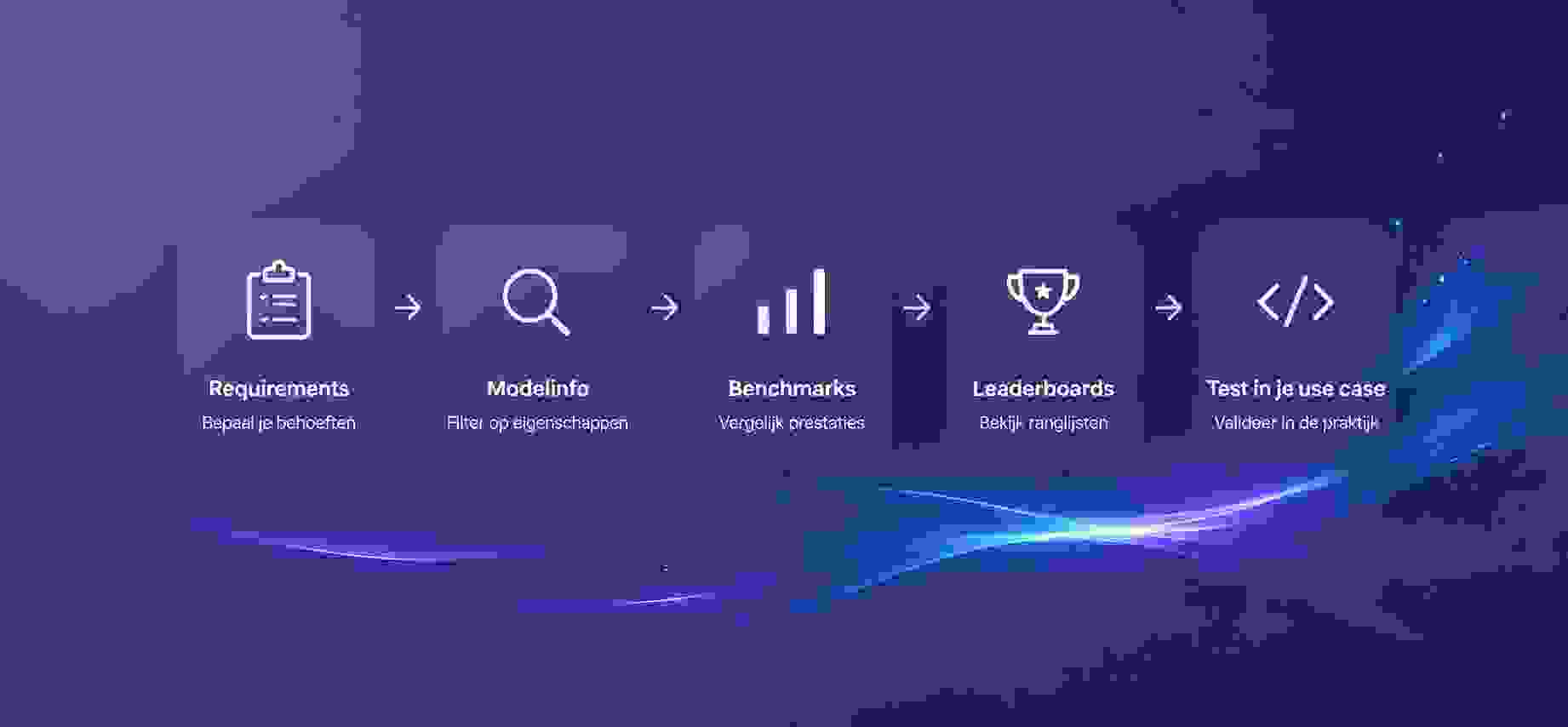
From making the initial selection to analysing benchmarks and assessing their limitations:
1. Start with Your Requirements
Before you start comparing models, you need to know what you are looking for.
Selecting a model without clearly defined requirements is like buying a car without knowing what you intend to use it for. A sports car may be impressive, but it is not necessarily the best choice if you need to transport heavy materials every day.
So start by identifying the requirements your application places on the model.
For example, consider the following questions:
- Does the model need to be good at conversational tasks?
- Does it need to support multiple languages?
- Does it need to perform complex reasoning?
- Does it need to be capable of coding?
- Does it need to be able to call external tools?
- Does it need to work with images or other forms of multimodal input?
- Does it need to run locally?
- How important are speed and latency?
- What is the available budget?
- Are there any requirements regarding privacy and data storage?
Distinguish between mandatory requirements and preferences. A model that does not meet a mandatory requirement can immediately be ruled out. Only then does it make sense to compare the remaining models.
I use a two-step approach: first, investigate the technical and practical characteristics, then analyse performance.
2. Make an Initial Selection Based on Model Information
Every AI model has a number of characteristics that you can use to make an initial selection.
Much of this information can be found in the model card published by the provider.
Open Source, Open Weight or Closed Source?
One of the first decisions is whether you want to use an open-weight model or a closed model.
Closed models are generally accessed through the provider's API. You have very little infrastructure to manage yourself and can get started relatively quickly.
Open-weight models offer more control. You can host them yourself, modify them and integrate them into your own infrastructure. This can be particularly interesting in terms of privacy, cost